


Grötbröd: The Swedish Breakfast Trick That Saved My Tuesday
A.k.a. what to do with the porridge nobody finished
It's 7:14 am. I've made too much porridge. Again.
This happens roughly four mornings out of five at my place. The kids ask for porridge, I make a generous pot because I'm an optimist, they eat about two-thirds, and I'm left with a small pond of warm oats nobody's planning to come back to.
For years I'd shrug and tip it in the bin. Then my mum - who is Swedish, like me, and has strong opinions about food waste - reminded me about grötbröd.
Grötbröd (literally "porridge bread") is one of those quietly genius Swedish kitchen tricks that doesn't make it into the cookbooks. You take yesterday's leftover porridge, throw it into a quick dough, scoop it into messy little mounds on a tray, and twenty minutes later, you've got warm, seedy, slightly chewy bread rolls. The porridge gives them this incredible soft, almost custardy crumb. The seeds on top do all the heavy lifting visually. They look like you tried much harder than you did.
I made a batch this morning. Felt like sharing.
A few honest notes before we start
The traditional recipe uses fresh yeast and regular wheat flour. I had neither. So I made it with baking powder and a gluten-free flour mix, and honestly? It worked beautifully. Faster (no proofing time), and it means the recipe actually works for the people in my life who can't eat gluten.
If you want the proper overnight, fresh-yeast version, the link is at the bottom. But this is the everyday-Tuesday version. The one I actually make.
Tess's Grötbröd (No-Yeast, Gluten-Free)
Makes: 10–12 small breads Time: 30 minutes start to finish
What you need
- 1½ cups leftover porridge (oat, rice, whatever your kids didn't finish)
- 100ml Greek yoghurt (full-fat is best)
- 300ml water (room temp)
- 1 tsp honey/maple syrup
- 3 cups gluten-free flour mix (I use a basic supermarket blend)
- 2 tsp baking powder
- 1 tsp flaky salt
For the top:
- A small handful of mixed seeds - pumpkin, sunflower, sesame, or extra oats if you have them
How to make them
- Heat the oven to 220°C (200°C fan). Pop a baking tray in to warm up.
- In a big bowl, mix the porridge, yoghurt, water, and honey/maple syrup. Stir until it's a loose, lumpy slurry. (It will look unpromising. Trust.)
- Add the flour, baking powder, and salt. Mix quickly with a wooden spoon until it just comes together. The dough should be wet and shaggy — more like a thick batter than a kneading dough. Don't overwork it.
- Pull the hot tray out, line it with baking paper.
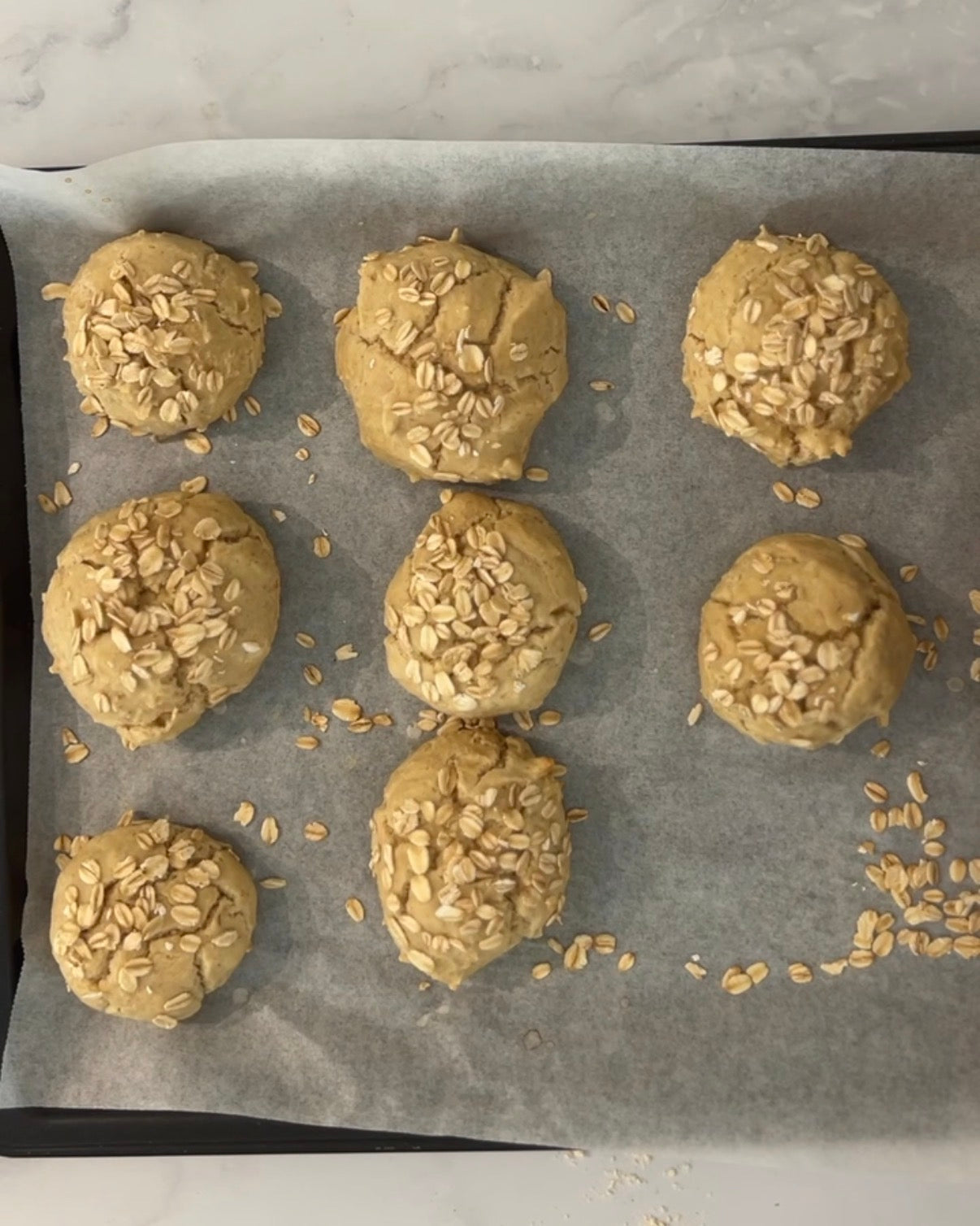
- Use a big spoon dipped in cold water to scoop mounds of dough onto the tray. Aim for 10–12 mounds, spaced apart. The cold water stops the dough sticking to the spoon. Don't try to make them tidy.
- Sprinkle generously with oats while the dough is still wet so they stick.
- Bake for 18–20 minutes until golden on top and they sound a bit hollow when you tap them.
- Cool on a wire rack for at least 10 minutes before tearing into one.
How I eat them
Warm, split open, with butter melting into them. That's the gold standard.
But also:
- With a slice of cheese and a smear of butter and honey (very Swedish, don't knock it)
- Toasted the next day with avocado
- Crumbled into soup like a rough crouton
They keep for 2 days in an airtight container, or 2 months in the freezer. Just pop a frozen one in the toaster.
Why I love this recipe
It's the same logic I built Wellness by Tess on, honestly. Real ingredients. No waste. No shortcuts. Made by hand. The kind of food my grandmother in Sweden would recognise as actual food, not a 22-ingredient cardboard puck pretending to be healthy.
If you like this - the whole "ridiculously clean, properly delicious" approach to treats - that's basically what I've been doing in our Sydney kitchen since 2012. Slices, balls, cookies, bars. Same philosophy, much more chocolate.
